
Some Contracts Get Signed Later
Some contracts are drawn, shaped, and bolted together - and only signed later.
In a way it's obvious. But it only really sinks in when you run into a situation and think: I've seen something like this before.
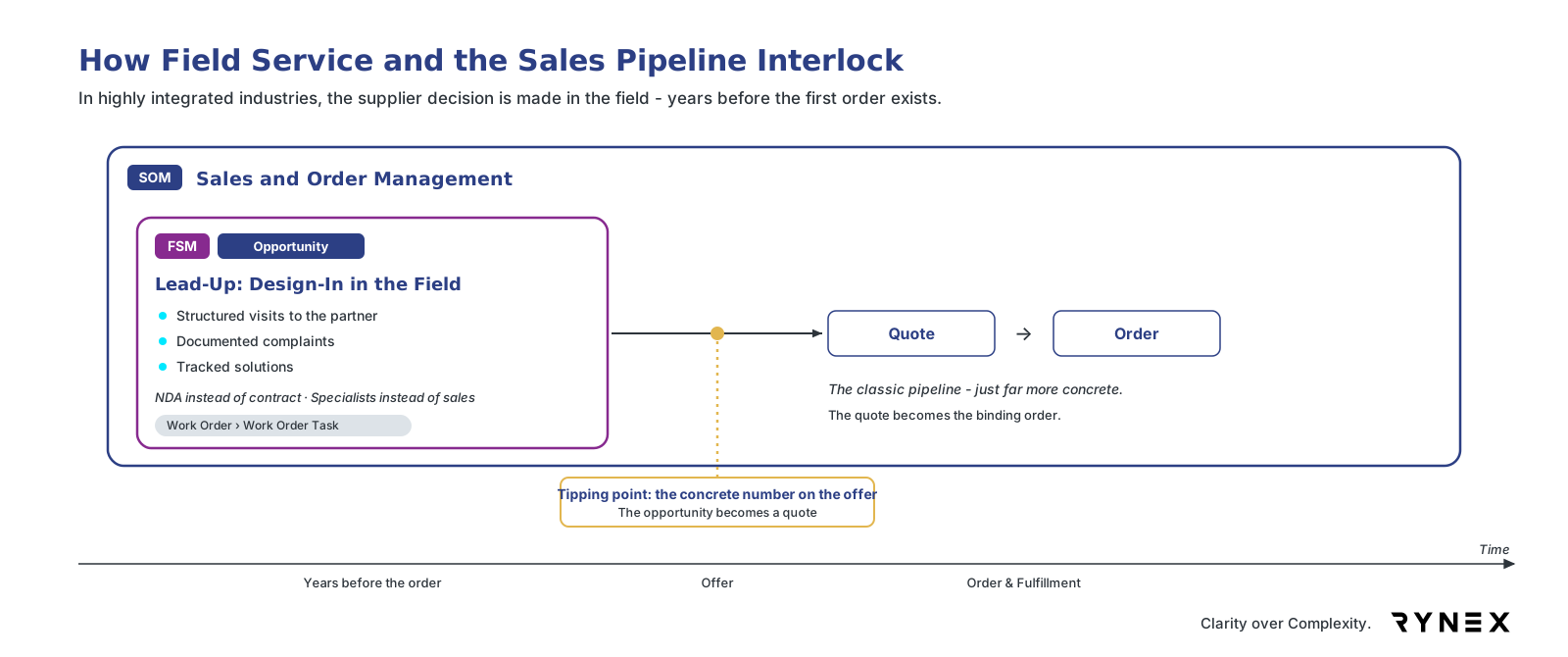
There's a manufacturer that wants to know: how do I model my lead and opportunity processes when these aren't really classic leads or opportunities at all, but actual projects - an investment that can turn into an opportunity?
- Come again? But that's opportunity management.
- No, only half.
Something genuinely fascinating happens here - something you can't unsee once it's dawned on you. But first things first.
Motorhome: Two Industries, One Vehicle
A motorhome is a single, seamless vehicle. But before it became that, two industries that rarely meet had to work together: the living quarters come from a motorhome manufacturer who specializes in practical interior layouts, the chassis from a vehicle maker who rarely thinks about kitchens and beds. Only by building it together do the two grow into one.
The body is built around this one specific chassis, and the vehicle is tweaked here and there - axle load, weight distribution, mounting points, the transition to the cab. The two merge and belong together from then on. If the vehicle manufacturer can't deliver, there is no motorhome. The chassis can no longer be swapped without replanning half the body. Two parts from two industries that now only work as a pair.
And when exactly was the decision made that these two specific companies would work together? It happens somewhere between sale and order.
This process of designing together decides which chassis it will be. The vehicle maker that fits best - or adapts best - wins the business.
Inside the Structure: Visible Only When It Stops
With buildings it's the same - you just don't notice until something stops. An escalator or an elevator isn't set down next to the structure; it sits inside it: shaft, depth, and opening are matched precisely to this one component. As long as everything runs, no one gives it a thought - you ride up with no idea how deeply the unit is built into the building. Only when it stops does it show: you can only replace it with an identical model. And when a unit like that goes down, a whole station grinds to a halt - anyone who tried to get through Berlin Central Station in early 2026 experienced it firsthand.
In reality, procurement manages a choice someone made years earlier
A gas power plant is built around its turbine. Foundation, hall, cooling, generator, grid connection - all designed for this one specific machine model. The component shapes the structure, the structure shapes the component. Turbine makers and utilities plan hand in hand.
And once you have an eye for it, it doesn't stop. Software that gets written deeper into a company's DNA with every sprint and iteration, until switching feels like surgery. Always the same picture: two sides that come together early, shape themselves around each other, and eventually can't do without one another. The bond isn't just on paper - it's part of both companies.



 +49 15252820037
 Albin-Köbis-Str. 12, Cologne, 51147, Germany
 LinkedIn